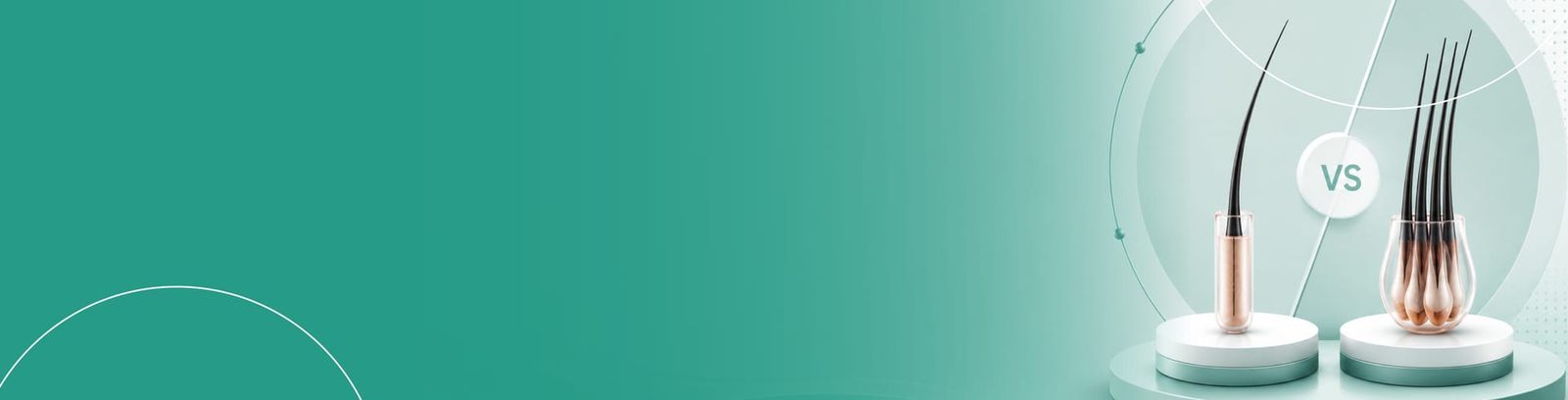
Why Do Multiple Hairs Grow From One Follicle?
Multiple hairs can grow from one follicular unit. A plain-language guide to why this is normal and why it matters for FUE hair transplant planning, density and hairline design.
It is normal for several hairs to grow close together in one follicular unit. Patients often describe this as multiple hairs from one follicle, but in hair restoration the more precise term is a multi-hair follicular unit. These natural groupings matter because surgeons use single-hair grafts for natural hairlines and multi-hair grafts for density.
What is a follicular unit?
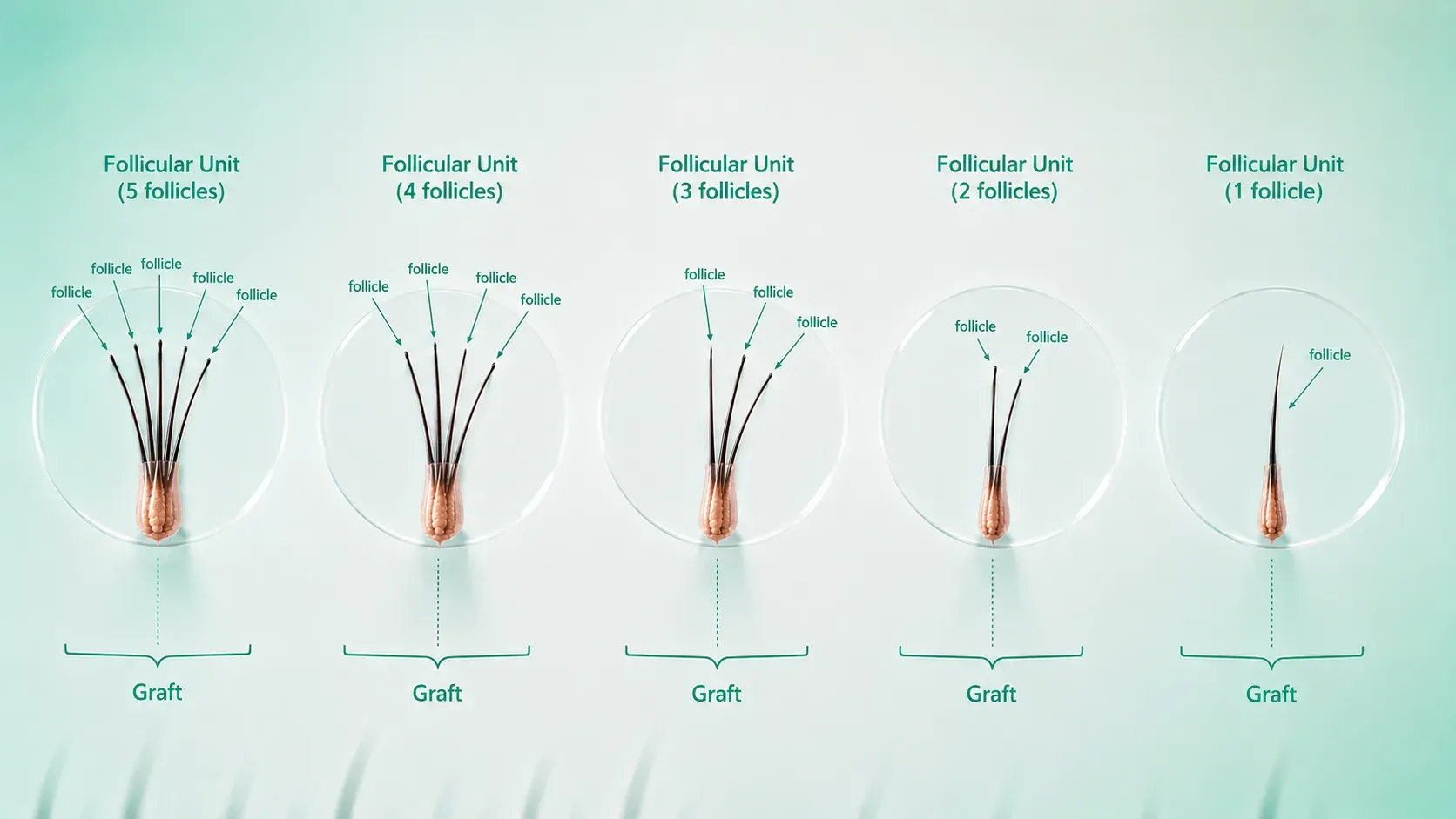
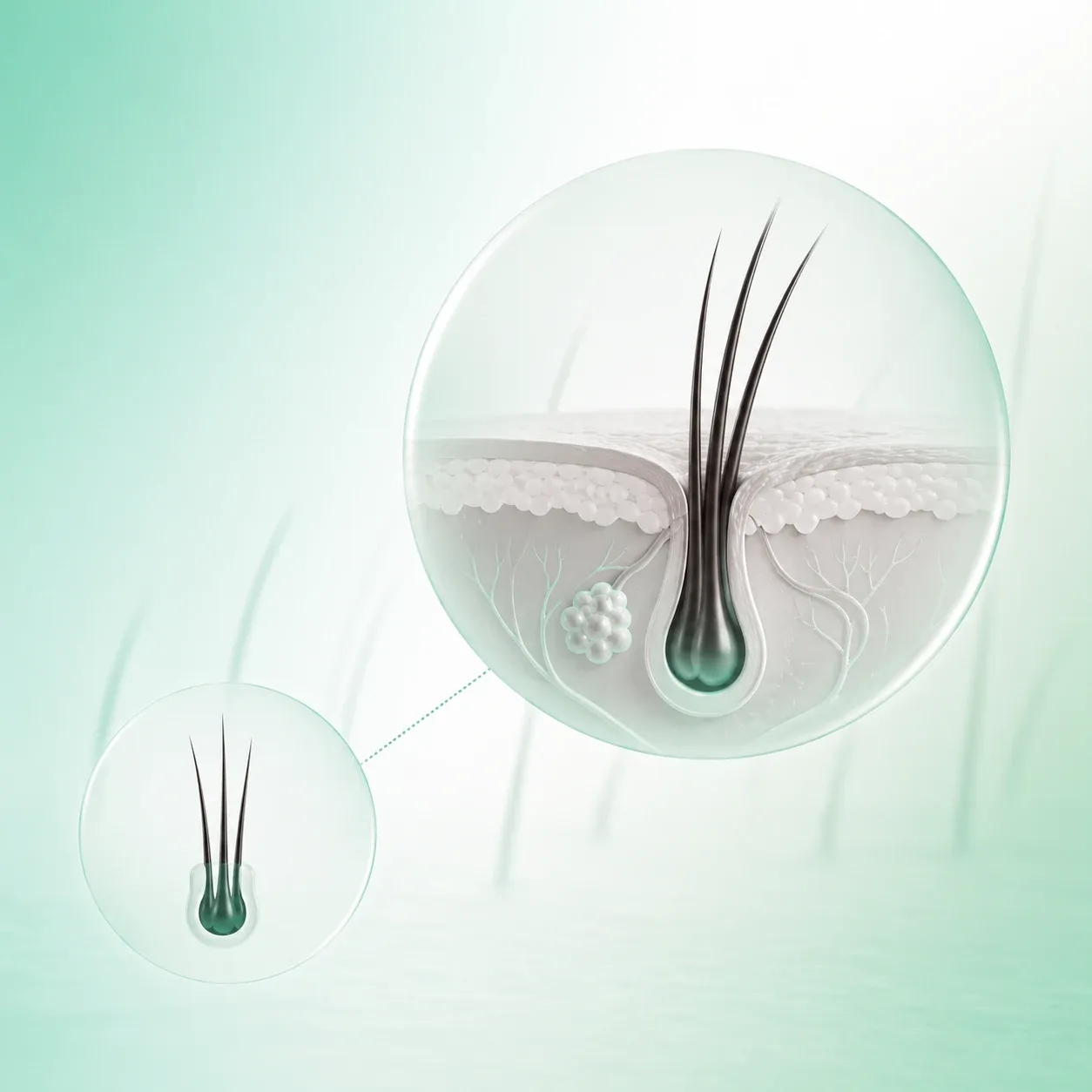
Many patients notice two or three hairs coming from what looks like the same pore, or read their plan and see terms like single grafts, double grafts and multi-hair grafts. A follicular unit is a natural grouping of hair follicles in the scalp, and a single unit may contain one, two, three or four hairs that grow close together. When people say multiple hairs from one follicle, they usually mean multiple hairs from one follicular unit. That is normal, and multi-hair units are a major reason transplanted hair can look dense.
The most hairs a graft carries, for density
Four hairs for the mid-scalp and crown
Three hairs that start building density
Two hairs, just behind the hairline
A single hair, for the softest hairline edge
Why some follicles grow one hair and others grow more
Hair distribution is natural and variable. Genetics, scalp region and individual biology all influence how hair groups together.
Why this matters for FUE hair transplant
FUE is not only extraction. It is selection, sorting and placement. After grafts are extracted, they should be organized by hair count and quality. A thoughtful plan might use single-hair grafts at the frontal edge of the hairline, two-hair grafts just behind the front, three-hair grafts in the mid-scalp and multi-hair grafts in the crown or high-density zones.
What happens if multi-hair grafts are placed in the wrong area
If multi-hair grafts are placed too far forward in the hairline, the result can look harsh. A natural hairline usually has soft irregularity and finer hairs at the front. Poor placement can create an unnatural hairline edge, a pluggy appearance, wrong growth direction, a dense front with weak transition and difficult correction later.
One graft is not always one hair
A patient may receive 2,000 grafts, but those grafts may contain more than 2,000 hairs. This is why patients should be careful when comparing clinics. A raw graft number does not tell the whole story. Important factors include average hairs per graft, graft survival, placement strategy, hairline design, donor area safety, hair caliber and recipient area size.
If you see irritation, pain, inflammation, pus, redness or sudden scalp changes, speak with a qualified medical professional. Healthy multi-hair follicular units are normal and can provide better visual coverage when grafts are extracted and placed responsibly.
FAQ