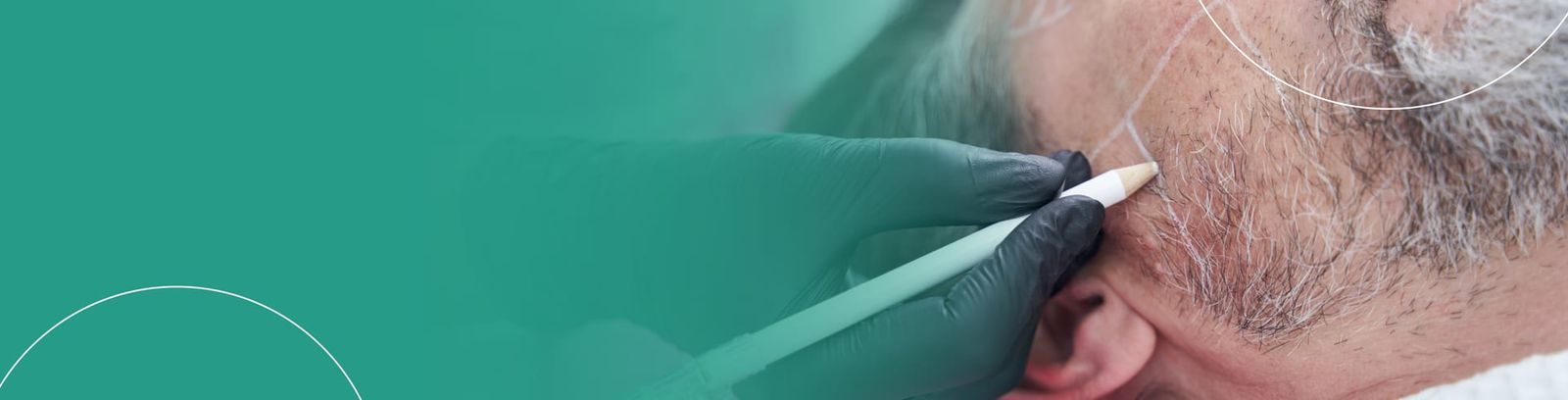
Beard Transplant Recovery Timeline: Day 1 to Month 12
What healing looks like after a beard transplant, from early crusts and shedding through shock loss, new growth and final maturation. Every stage explained so you know what is normal and when to call the clinic.
Beard transplant recovery usually means redness and small crusts in the first week, shedding during the first few months, and new beard growth beginning around month 3 or 4. Full maturation often takes 9 to 12 months. The exact timeline varies by patient and aftercare.
Face, not scalp
Why beard recovery is different
A beard transplant uses the same FUE principle as a scalp procedure, but the recipient area is your face. That changes what recovery feels and looks like, and it raises the bar on planning.
Because facial hair grows differently from scalp hair, angle and direction matter more, and every stage of healing is out in the open.
How it works
From donor area to a fuller beard
Grafts are taken one by one from the scalp donor area and implanted into the beard for natural density and direction, then grow in over the months that follow.
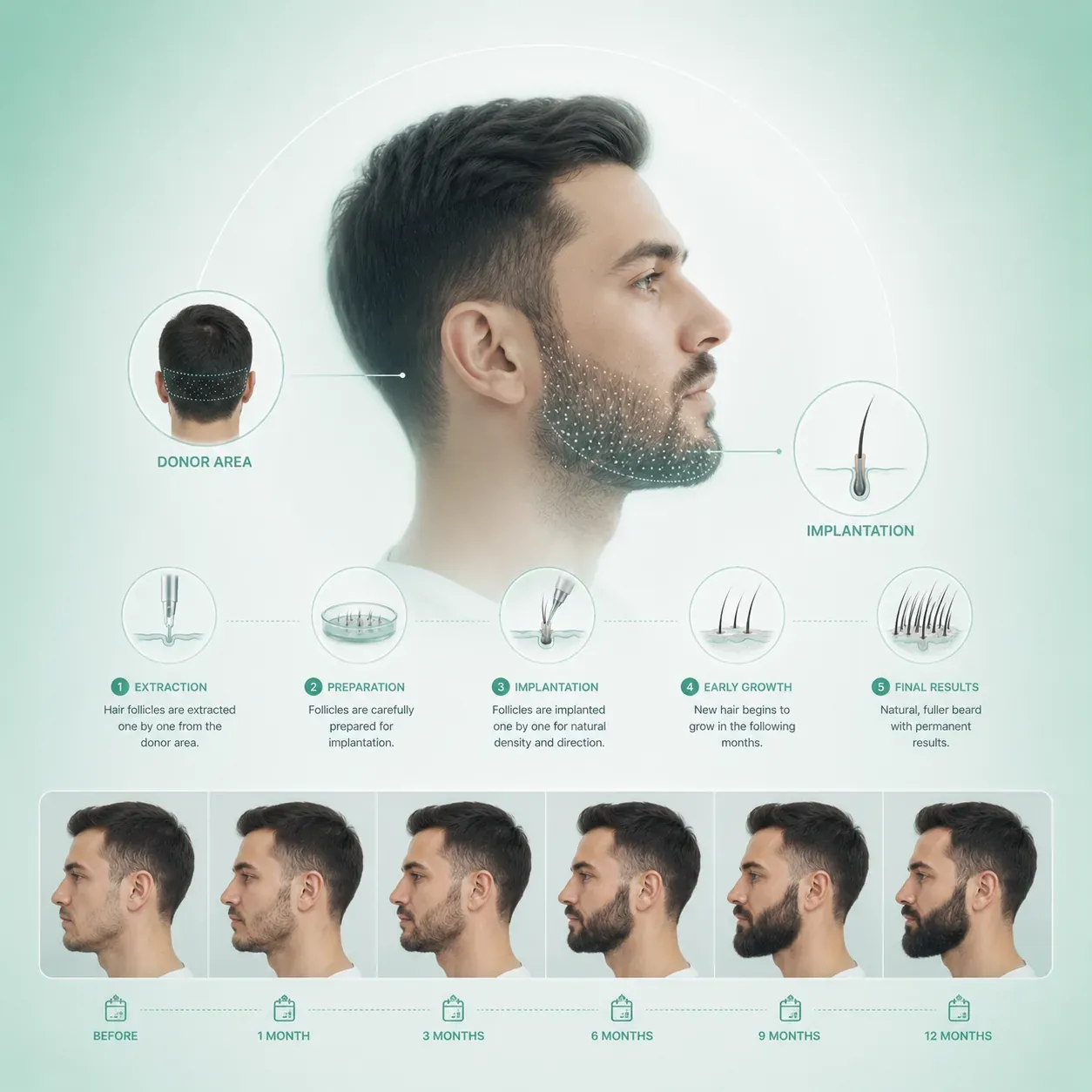
The recovery timeline
What happens, stage by stage
Ten stages, from the day of the procedure to the twelve-month mark. Tap any stage to follow the journey.

Grafts are placed
Donor follicles, usually from the scalp, are implanted into the beard. You may leave with small visible grafts, redness, mild swelling and donor-area sensitivity, plus cleaning, medication and activity instructions. The grafts are delicate now.
Red and dotted
The beard area may look red or dotted, with some swelling in the cheeks or lower face. Tightness, mild tenderness and awareness of the grafts are all normal. Do not touch, scratch or pick.

Small crusts form
Crusts form around the implanted grafts. Avoid scratching, shaving, rubbing with towels, direct sun, heavy sweating, the gym, sleeping face-down and any products the clinic has not approved. Public-facing work may warrant a few days off.
Crusts loosen and fall
Crusts begin to loosen and shed naturally, do not rush it. The clinic will tell you how to wash and when crusts can be gently removed.
Socially presentable
Many patients look presentable again. The implanted hairs may look like they are growing, but this is not the final beard, and those hairs may shed next.
The transplanted hairs shed
Many transplanted beard hairs shed in this window. Shock loss does not mean the procedure failed, the shaft sheds while the follicle stays under the skin and rests. Expect this before surgery.
The quiet phase
Often the most frustrating stretch, the skin has healed and you are simply waiting. The follicles are quietly preparing for a new growth cycle.
New hairs appear
New hairs may begin to appear, thin, uneven or slow at first. The mustache, cheeks and jawline may not mature at the same pace.

Visible improvement
Many patients start seeing more visible beard density. The new hairs get stronger and easier to shape, though it is still not final.

The final beard
Full results often become clear between month 9 and 12. Once healed, transplanted hair can be trimmed, shaved and styled like natural facial hair, and some patients keep improving past a year.
Shedding in weeks 3–8 is normal shock loss. The shaft falls while the follicle rests under the skin. New growth is gradual, and the beard often looks final between month 9 and 12.
During recovery
Shaving, exercise & warning signs
Cost & planning
What a beard transplant covers
Final pricing depends on the area treated, your density goal and graft range. Common areas include the following.
Ready to restore your hair?
Start with a free, no-obligation evaluation.